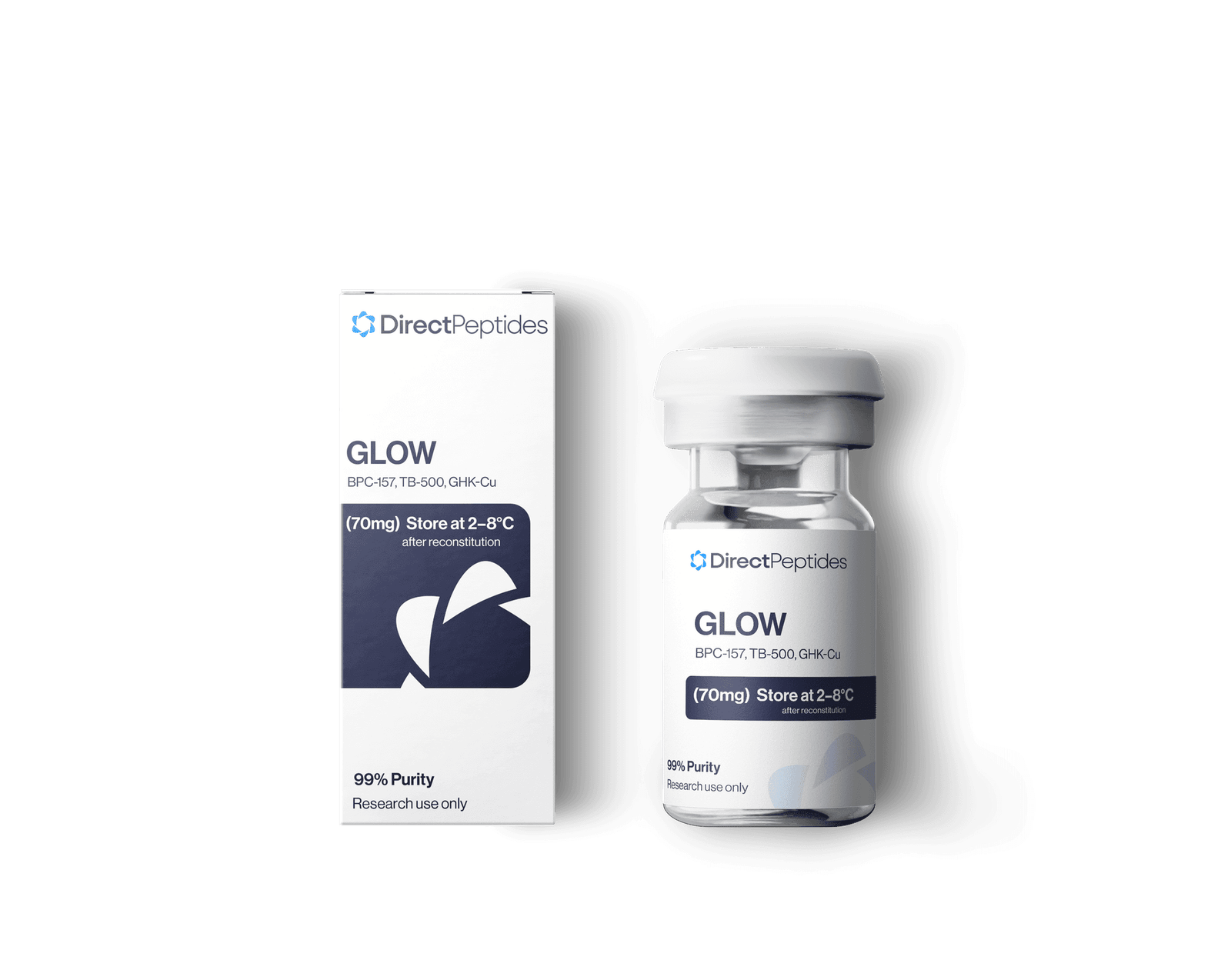
Buy GLOW Online – GLOW for Sale – High Quality Peptides
Looking to buy GLOW for your laboratory research? You have come to the right place. At Direct Peptides Store, we have GLOW in stock and ready for immediate shipping. Our products are of the highest purity, ensuring that your research results are consistent and reliable.
GLOW for Research Purposes
This product, GLOW, is one of our most popular items. When you are searching for GLOW for sale, it is crucial to find a supplier that prioritizes quality and transparency.
Technical Specifications for GLOW
| Attribute | Details |
|---|---|
| Product Name | GLOW |
| SKU | x26032008435116.png |
| CAS Number | 49557-75-7 |
| Molecular Formula | C₁₄H₂₄CuN₆O₄ |
| Molecular Weight | 340.9 g/mol |
| Availability | In Stock |
Detailed Product Overview
GLOW Blend Overview
The GLOW Blend combines three synthetic peptides studied for their roles in cellular regeneration and repair processes: GHK-Cu, BPC-157, and TB-500. Together, these peptides are investigated for their influence on angiogenesis, extracellular matrix remodeling, and systemic repair pathways. In laboratory and preclinical models, the combination provides a platform for exploring synergistic effects in tissue integrity, vascular regulation, and cellular recovery.
Pickart L. et al. (2015)
History
The concept of the GLOW Blend arises from decades of research into individual regenerative peptides. GHK-Cu was first identified in human plasma in the 1970s and later studied for gene regulation and tissue repair activity. BPC-157 was synthesized in the 1990s as a gastric protein fragment analog and has since been researched for angiogenic and reparative processes. TB-500, derived from thymosin beta-4, traces its research lineage to thymus peptide studies in the 1960s and is recognized for its effects on cellular migration and angiogenesis. Combined, these peptides represent a convergence of regenerative research lines.
Sikiric P. et al. (1993)
GHK-Cu Structure
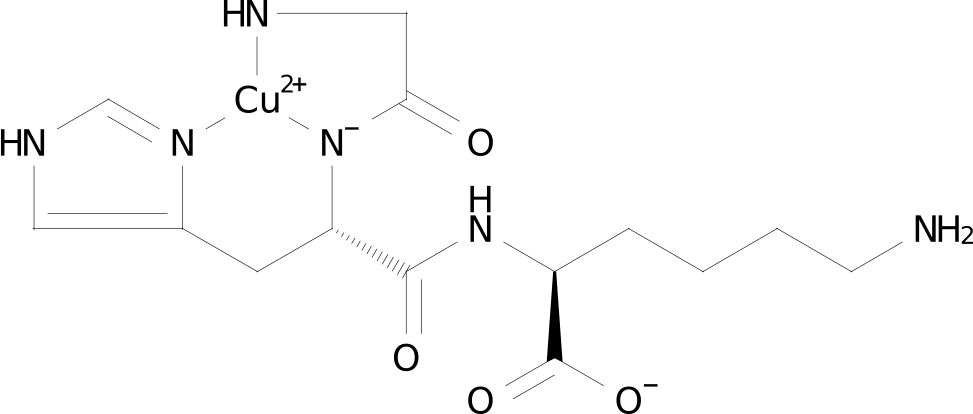
CAS #: 49557-75-7
Molecular Formula: C₁₄H₂₄CuN₆O₄
Molecular Weight: 340.9 g/mol
PubChem ID: 5311476
BPC-157 Structure
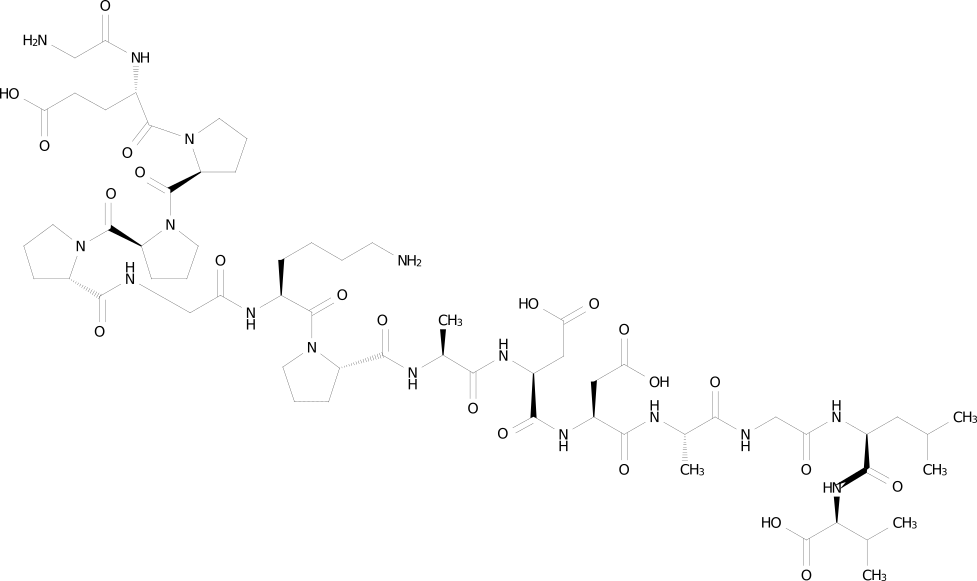
CAS #: 137525-51-0
Molecular Formula: C₁₄H₂₄CuN₆O₄
Molecular Weight: 340.9 g/mol
PubChem ID: 5311476
TB-500 Structure

CAS #: 77591-33-4
Formula: C₂₁₂H₃₅₀N₅₆O₇₈S
Molecular Weight: 4963.5 g/mol
PubChem ID: 16132321
Research Findings
The GLOW Blend, which combines GHK-Cu, BPC-157, and TB-500, has been studied across structural, dermatological, vascular, and systemic models. Research highlights its activity in collagen organization, wound closure, angiogenesis, and cellular protection. Together, these peptides complement one another by engaging pathways linked to tissue repair, regeneration, and resilience in preclinical settings.
Key Areas of Research:
• Structural: collagen, matrix, tendon/ligament
• Dermatological: wound closure, skin, hair growth
• Vascular: angiogenesis, nitric oxide, vessels
• Systemic: protection, recovery, viability
Together, these findings suggest broad experimental potential for the GLOW Blend across multiple biological pathways. By combining structural support, vascular regulation, and dermatological repair with systemic protection, the GLOW Blend provides a versatile platform for research into regeneration, tissue recovery, and overall biological resilience in laboratory models.
Pickart L. et al., 2015
References
Pickart L. et al. (2015). GHK-Cu and regulation of multiple biological processes in aging and repair. BioMed Res Int.
Sikiric P. et al. (1993). A new gastric peptide, BPC-157, characterized and synthesized. Peptides, 14(1): 127–131.
Goldstein A.L. et al. (2005). Thymosin beta-4 and tissue regeneration: potential mechanisms of action. Ann N Y Acad Sci.
Maquart F.X. et al. (1988). Stimulation of collagen synthesis by the tripeptide GHK in fibroblast cultures. FEBS Lett, 238(2):343–346.
Japjec M. et al. (2021). BPC-157 and tendon/ligament structural integrity in experimental models. Int J Mol Sci, 22(17):9397.
Smart N. et al. (2007). Thymosin beta-4 induces progenitor mobilization and neovascularization. Nature, 445(7124):177–182.
Philp D. et al. (2003). Thymosin beta-4 promotes dermal wound healing. J Invest Dermatol, 121(4):694–701.
Hsieh M.J. et al. (2014). Pro-angiogenic and reparative effects of BPC-157 in preclinical models. J Mol Med, 92(5): 483–495.
Bock-Marquette I. et al. (2004). Thymosin beta-4 activates integrin-linked kinase and promotes cardiac repair. Nature, 432(7016):466–472.
Kang E.A. et al. (2020). BPC-157 protective effects on liver, kidney, and lung in ischemia–reperfusion injury. Int J Mol Sci, 21(12): 4232.
Why Order GLOW from Direct Peptides Store?
When you decide to order GLOW online, you want to ensure the vendor is reputable. We provide detailed analysis and support for all our research chemicals. For more information on peptide research, you can visit the National Center for Biotechnology Information.
Frequently Asked Questions (FAQ)
Where can I buy GLOW?
You can buy GLOW directly from our secure online store.
Is GLOW in stock?
Yes, we maintain a consistent supply to ensure researchers have access without delay.